|
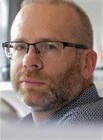
Koen Van Leemput, Ph.D.Department of Neuroscience and Biomedical EngineeringAalto University Rakentajanaukio 2C 02150 Espoo, Finland Athinoula A. Martinos Center for Biomedical Imaging Massachusetts General Hospital, Harvard Medical School 149 Thirteenth Street, Suite 2301 Charlestown, MA 02129 USA |
| Open positions: We currently have several openings (both PhD students and postdocs) in Helsinki, Finland! |
Short bio
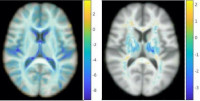
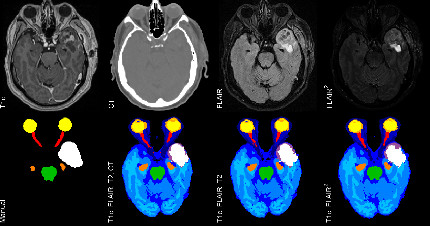
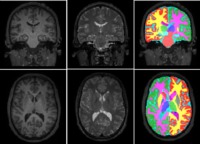
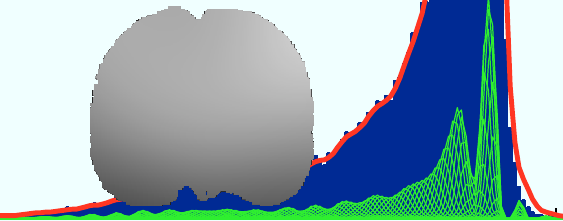
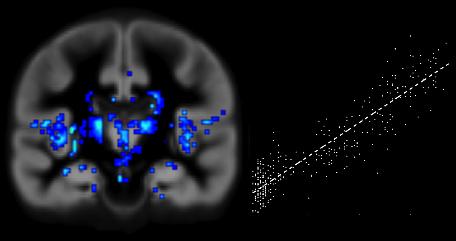
I am an academic with a focus on medical image computing in general, and neuroimage analysis in particular. Together with my students I develop computational models and methods to extract relevant information from medical images. We are particularly interested in methods that extrapolate to clinical settings, i.e., that can handle pathologies and that work out-of-the-box on data acquired with different scanning hardware, software and protocols. Many of the methods we develop are included in the open-source neuroimage analysis software suite FreeSurfer.
I obtained my PhD degree from the KU Leuven, Belgium, in 2001. In 2007 I became a faculty member at the Martinos Center for Biomedical Imaging, Massachusetts General Hospital, Harvard Medical School, and a research scientist at the MIT Computer Science and Artificial Intelligence Laboratory. Between 2010 and 2023 I was a professor at the Technical University of Denmark, and currently I am at Aalto University in the capital area of Finland.
I serve as an associate editor of the IEEE Transactions on Medical Imaging, as a member of the editorial board of the Medical Image Analysis Journal, and as a reviewer for several international medical imaging journals and conferences.
Recent talks
-
2022 symposium of the Danish Society of Medical Physics:
Four Decades of Automated Image Registration and Segmentation
-
slides (PowerPoint, 24M)
-
slides without movies (PDF, 6M)
-
Intro to "deep" vs. "classical" computational neuroimaging
at the
6th Congress of the European Academy of Neurology (EAN2020):
Automated Image Analysis in Neurology: Principles and Practice
-
slides (PDF, 2M)
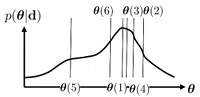
- Keynote at the MICCAI 2019 Workshop on Uncertainty for Safe Utilization of Machine Learning in Medical Imaging: Input and Output Uncertainty in Medical Image Analysis - slides (PowerPoint, 79M) - slides without movies (PDF, 7M) - video recording
Software
Many of the methods we develop are distributed through the open-source software suite FreeSurfer, in particular:-
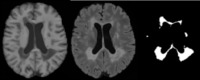
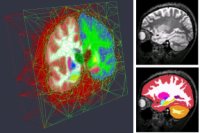
The contrast-adaptive whole-brain segmentation method SAMSEG, including extensions for segmenting multiple sclerosis (MS) lesions and longitudinal scans.
A special version of SAMSEG to segment head structures relevant for transcranial brain stimulation is included in SimNIBS.
- The same underlying software is also used in FreeSurfer for segmenting hippocampal subfields and nuclei of the amygdala, as well as brainstem substructures and thalamic nuclei.
Teaching
- DTU Course 22525: Medical Image Analysis. Lecture slides + book are available: http://nmr.mgh.harvard.edu/~koen/mia/.